
Extensive Fire Door Inspections
Call 0207 419 5001 or email fdsurvey@cityfiretraining.co.uk
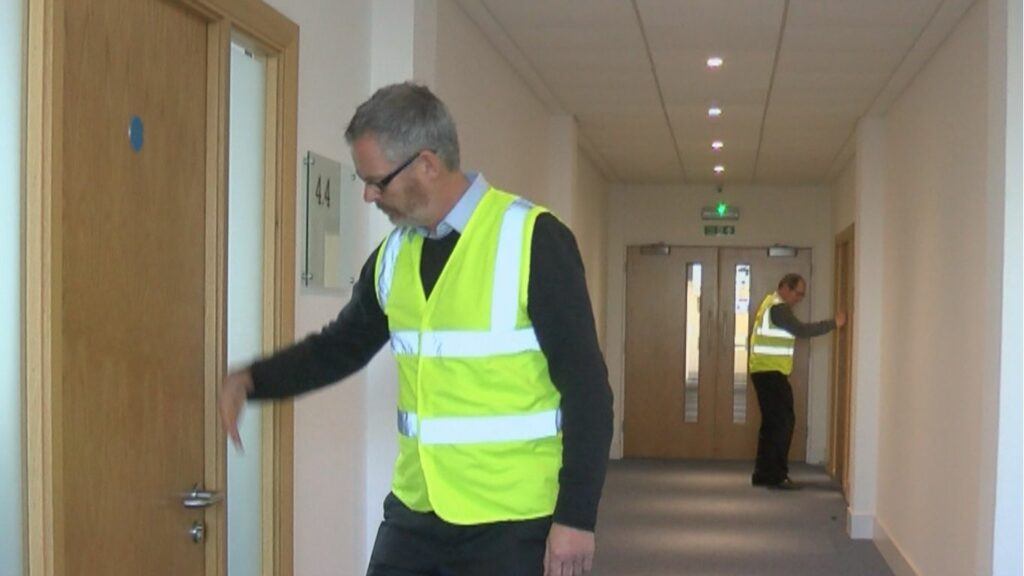
City Fire Training offers comprehensive fire door surveys and assessments in London and home counties. Our accredited fire door surveyors and fire risk assessors ensure that fire doors are thoroughly inspected, with any faults recorded and detailed in a full report. These reports adhere to the FDIS Pass/Fail standard and outline any necessary work to meet compliance.
According to Section 5 of the Fire Safety Order 2005, the responsible person in a workplace or building must ensure compliance with articles 8 to 22 to maintain fire safety precautions. Fire doors are a principle means of compartmentation to prevent the spread of fire and smoke.
Further more the Fire Safety Regulations 2022 made it a legal requirement for landlords of buildings over 11 meters tall to ensure all fire doors within their premises are checked on the following basis:
Common area doors – Every 3 months
Flat entrance doors – Every 12 months
Further guidance can be found on the following fact sheet Regulation 10
Our rates for fire door surveys in London are based on half-day, full-day, and per-door rates.
The Role of a Fire Door
Fire doors play a crucial role in building safety by serving several key functions:
Containment: They help to preserve the integrity of a building, limiting the spread of fire and smoke to specific areas. This containment is vital for preventing the fire from spreading rapidly, and escalating an incident.
Protection of Escape Routes: Fire doors protect escape routes, such as corridors and staircases, from the effects of fire and smoke, ensuring that occupants can evacuate safely.
Time for Evacuation and Firefighting: By resisting fire for a specified period (usually at least 30 minutes), fire doors provide valuable time for people to evacuate and for firefighters to control the fire.
Automatic Closing: Many fire doors are designed to close automatically when a fire is detected, ensuring they are always in the correct position to perform their protective function
Regulatory Compliance: Fire doors are a legal requirement in many buildings, ensuring compliance with fire safety regulations
Regular maintenance and proper installation are essential to ensure fire doors function correctly when needed
For Fire Door Surveys - Call 0207 419 5001 or email fdsurveys@cityfiretraining.co.uk
Below is our 17-point assessment criteria, essential to the integrity of a Fire door:
Identification marks and certificates
Recording of labels and other marks
Permitted gaps
Are the gaps between doors, doors and frames and also doors and floors adequate?
Pass or fail
Condition of the frame and whether it has passed
Fire glass
Is the glass CE approved / fire safety glass and also fitted correctly?
Structure pass / fail
Has the structure of the door and also frame passed? This includes the condition of stopping around the frame / wall.
Other fire door identification info
The number of the room and also the floor number
Type of door
Type and rating of fire door
(ie FD30)
Dimensions of the door
Height, width and also depth of door (in millimetres)
Hinge type
Are the hinges correct, CE marked, and also fitted with the correct screws
Intumescent strips and smoke seals
Are seals and also strips fitted in good order and also are they the correct type
Signage
Is the door fitted with the correct signage?
Location
Location of the door – description if required
Material
Door material (wood, metal, glass etc)
Type of fire door set
The type of door set. This may be a single door, a double door or also a door and a half leaf.
Lock type
Have any locks and also door furniture fitted passed the inspection?
Fire door closer
Is the self closer working correctly?
Reports also include an overall Pass/ Fail evaluation and inspectors notes about each door. The fire door inspection report will also contain photos of any door to explain any findings. For more info on reports, either call or email now
Other Fire Door Survey Information
Non destructive surveys
Fire door surveys are visual inspections of each fire door, so will not look at internal part of the door. Neither are they subject to fire testing.
Costs
Any fire door survey cost will depend on how many of fire doors and also other types of doors in the workplace. A minimum half day fee is payable. Either call or email for a quotation. Current rates start at £350 + VAT.
CFT do not carry out repairs or adjustments to doors so all advice is impartial.
Fire door inspectors
Our fire door inspectors hold an advanced qualification and are also either serving or retired fire service officers.
Recent fire door survey
Fire Door Survey – Event Venue, London
A fire door survey was undertaken at an event venue constructed in the 1930s.
Overall, the majority of fire doors were found to be in generally serviceable condition; however, a number of defects were identified that may compromise fire and smoke resistance if not addressed.
- Hinges: All hinges were of a suitable type and generally in good condition. However, a number of doors were noted to have missing hinge screws, which require reinstatement to ensure integrity of the door assembly.
- Gaps and Alignment: Excessive gaps were observed on multiple doors. It is recommended that these doors are eased and adjusted to achieve acceptable tolerances.
- Door Fit and Condition: Several doors were not fitting correctly within their frames. This appeared to be due to warping of both the door leaf and frame, likely caused by prolonged wedging open. Remedial works or replacement may be required where adjustment is not feasible.
- Door Frames: Some frames were found to be damaged and require repair to maintain adequate fire resistance.
- Door Leaf Integrity: While most doors were in good condition, some had been altered through the installation of new locks or the presence of holes. These doors require repair or replacement to maintain fire performance.
- Seals: A number of doors were fitted with older-style seals that were in poor condition. It is recommended that these are replaced with combined intumescent and cold smoke seals.
- Glazing: Fire-resisting glazing (Pyroglass), factory fitted, was observed throughout and appeared compliant.
- Signage: Some doors were noted to have missing or incorrect fire door signage, which should be rectified in accordance with relevant standards.
- Self-Closing Devices: A small number of self-closing devices required adjustment to ensure doors fully close and latch effectively.
- Certification: Some doors displayed certification labels; however, in many cases these had been painted over, preventing verification of compliance.
Photographic evidence of all identified defects was recorded during the survey.
This fire door survey was undertaken as part of an asset survey.